Choosing a builder is the largest decision in a custom home, and it is made earlier than most people expect, often before the design is finished and always before the real numbers exist. Get it right and the years that follow are demanding but clear. Get it wrong and the home still gets built, but you spend those years managing the builder instead of enjoying the process.
Trinity Custom Homes has been working in the luxury custom home market since 2010 and builds within roughly 45 minutes of its Sarasota office, from the barrier islands to Tampa Bay and Naples. This guide is what we would tell a friend who was about to hire a builder, whether or not that builder is us. It covers the eleven things that actually separate firms in this market, in roughly the order you should check them. The honest builders will be glad you asked.
Before you evaluate anyone’s work, confirm they are allowed to do it and protected while they do.
License. In Florida, a residential custom home requires a state-licensed contractor. Ask for the license number and look it up yourself on the Florida DBPR license portal; check that it is active, that it is a Certified General Contractor or Certified Residential Contractor license, and that the name on it matches the company you are talking to. Trinity Custom Homes builds under Florida license CGC1533201, and six licensed Florida contractors work on our team. Any builder should hand you this without being asked twice.
Insurance. Ask for current certificates of general liability and workers’ compensation, and ask to be named as an additional insured on the liability policy for your project. Then ask how the builder confirms that every subcontractor on your site carries the same. A builder who cannot answer the second question is exposing you to the first uninsured worker who gets hurt on your lot.
Lien protection. Florida’s construction lien law lets an unpaid subcontractor or supplier place a lien on your home even if you paid the builder in full. Ask how the builder handles lien releases: whether every trade and supplier signs a release with each payment, and whether you can see them. This is routine for a well-run firm and a warning sign when it is not.
Complaints and litigation. Look up the company and its principals in the Sarasota and Manatee County court records and on the DBPR complaint history. A long career will show something; a pattern is what you are looking for.
Building on the Gulf Coast is not building in general. A firm that does excellent work inland can be out of its depth on a barrier island, and the difference shows up in permitting delays and in how the home performs in its first serious storm.
Ask the builder to walk you through, in plain language, what your specific lot will require. If it is seaward of the Coastal Construction Control Line, that means a state permit through FDEP in addition to the county’s, and design constraints on the foundation and the structure. If it sits in a FEMA flood zone, ask which one (AE and VE carry very different requirements) and what the base flood elevation means for your finished floor and your budget. Ask about wind design pressures, impact-rated glazing, and what the Florida Building Code’s coastal provisions add to the cost and schedule of the structure you want.
You are not testing whether you understand the answers. You are testing whether the builder does, and whether they explain them the way an expert explains things: specifically, calmly, and without selling. Trinity Custom Homes treats coastal execution as the top-level positioning frame of the company for a reason: the homes we build are on barrier islands, on canals and bayfronts, and on lots where getting the permit is half the engineering. Ask any builder for two or three completed homes on lots like yours, and go look at them.
Most of what goes wrong on a custom home was decided, or left undecided, before the slab was poured. Ask what happens between the drawings and the first day on site.
Coordination. Ask whether the builder models the home before building it, and what they do with the model. Trinity Custom Homes builds every home twice: once in a 3D model that runs months ahead of the jobsite, then on the site. Architectural and structural drawings are merged into the model so that conflicts between the two show up on screen instead of in a framed wall, and selections are constructed virtually before we commit to a subcontractor. The layout is then set on site with the same tools, a Trimble Ri robotic total station and an HP SitePrint layout robot, against a published set of Trinity Framing Standards our trades build to. Other good builders do this differently; the question is whether they do it at all.
Buyout. Ask when each trade is contracted and against what scope. A home where the trades are bought out against detailed purchase orders before their work begins is a home where the budget means something. One where trades are engaged “as we go” is a home where the budget is a running estimate.
Allowances. An allowance is a placeholder for a selection you have not made yet. Ask how each one was set. The right answer is that it was set against your actual expectations for the home, not against the cheapest option that made the total work. Low allowances are how attractive bids become expensive homes.
Most buyers hire an architect first, then a builder. It is the natural order and it is not wrong, but the timing of the second decision matters more than most people are told. The homes that go smoothly are the ones where the builder is in the room while the design is still moving, pricing it as it develops, so the design that gets permitted is one that can actually be built for the budget.
Bring the builder in during design development, not after construction documents are finished. A good builder at that stage protects the architect’s intent by finding constructability and cost problems early, when they are still drawings, rather than late, when they are change orders. A builder who wants to redesign the house is not what you want either. Look for the one who asks what the architect was trying to do and then works out how to build it.
Trinity Custom Homes works with architects and designers who pursue excellence and collaborate without ego, and the relationships we keep for years are the ones that make our work what it is. The firms we have built with or work alongside in this market include DSDG Architects, CMSA Architects, MHK Architects, Jones Architecture, Sweet Sparkman Architecture, PS Design Workshop, Lear Studio Architects, Trop Architecture, and Beacon Home Design. If you already have an architect, ask them which builders they would put their own name next to. If you do not, we are glad to make an introduction based on the home you want to build.
Two things to listen for in any builder’s answer about architects: whether they name specific firms and homes, and whether they talk about protecting the design or improving it. The first tells you the relationships are real. The second tells you what kind of partner they will be.
A custom home is built by the people on it every day, not by the person who sold you the contract. Ask three questions.
Who runs the job, by name, and how many other jobs do they carry? The difference between a superintendent who visits and one who is present is the difference between catching a mistake before drywall and discovering it after. Every Trinity Custom Homes project carries a dedicated Builder, a hybrid project manager and superintendent, on site full time. Whatever firm you are talking to, “our team is on it” is not an answer. A name and a number are.
Who are the trades, and how long have they worked with this builder? The trade partners are the people who will frame, wire, plumb, and finish your home. Ask how the builder selects them, what standards they are held to, and how long the core relationships go back. A builder who cycles through subcontractors is a builder whose quality depends on luck. At Trinity Custom Homes, trade partners are onboarded deliberately and held to the same standards we hold ourselves, on quality, cleanliness, accountability, communication, and safety, and our in-house carpenters work exclusively on Trinity projects.
Can I visit? The answer should be yes, any time, with reasonable notice for safety. A builder who discourages visits is managing what you see. Ask also what a jobsite looks like at the end of the day; a clean, organized site is not cosmetic, it is how a careful firm works.
Houzz’s 2025 research found that the most common regrets after a custom build are about timeline clarity and communication, not finishes. Ask how you will know what is happening on your home when you are not there.
Ask for the cadence: how often you will hear from the builder without asking, in what form, and from whom. Ask what software the project runs on and whether you will have your own login to it. Ask how decisions are requested from you and how much notice you will get. And ask what happens when something goes wrong, because something will; the answer you want is that you hear about it from the builder first, with what they propose to do about it.
At Trinity Custom Homes, clients have real-time access to their project in Procore, including the working budget and the schedule, and a weekly update in writing that names what happened, what is next, and any change to the budget or schedule. That is one way to do it. The point is that the builder should be able to describe theirs as precisely.
Transparent budgeting is the thing we talk about most, so we have put it seventh on purpose. It matters enormously, and it matters more once the six things above are true.
Ask to see how the budget is presented to a client during the build. Not a sample proposal, the working budget: line by line, what was estimated, what has been committed, what has been spent, and what is left. Then ask the question that separates cost-plus builders from each other: when a line item comes in under budget, where does the difference go?
At Trinity Custom Homes, every budget line is visible to the client for the whole build, with real-time access to the project’s financials, receipts included. When a line comes in under budget, the surplus stays in the client’s budget, visible, as contingency available where it is needed next. When a line runs over, accumulated contingency covers it in the open, and you can see where the money came from and where it went. Change orders are named directly, in writing, in the weekly update. We do not promise few change orders; every custom home has them. We promise you will never learn about one after the fact.
Any builder can describe their books as transparent. Ask to see a live client ledger, and ask what happens to the savings. For what homes actually cost in this market, with 2026 ranges stated plainly, read how much it costs to build a custom home in Sarasota.
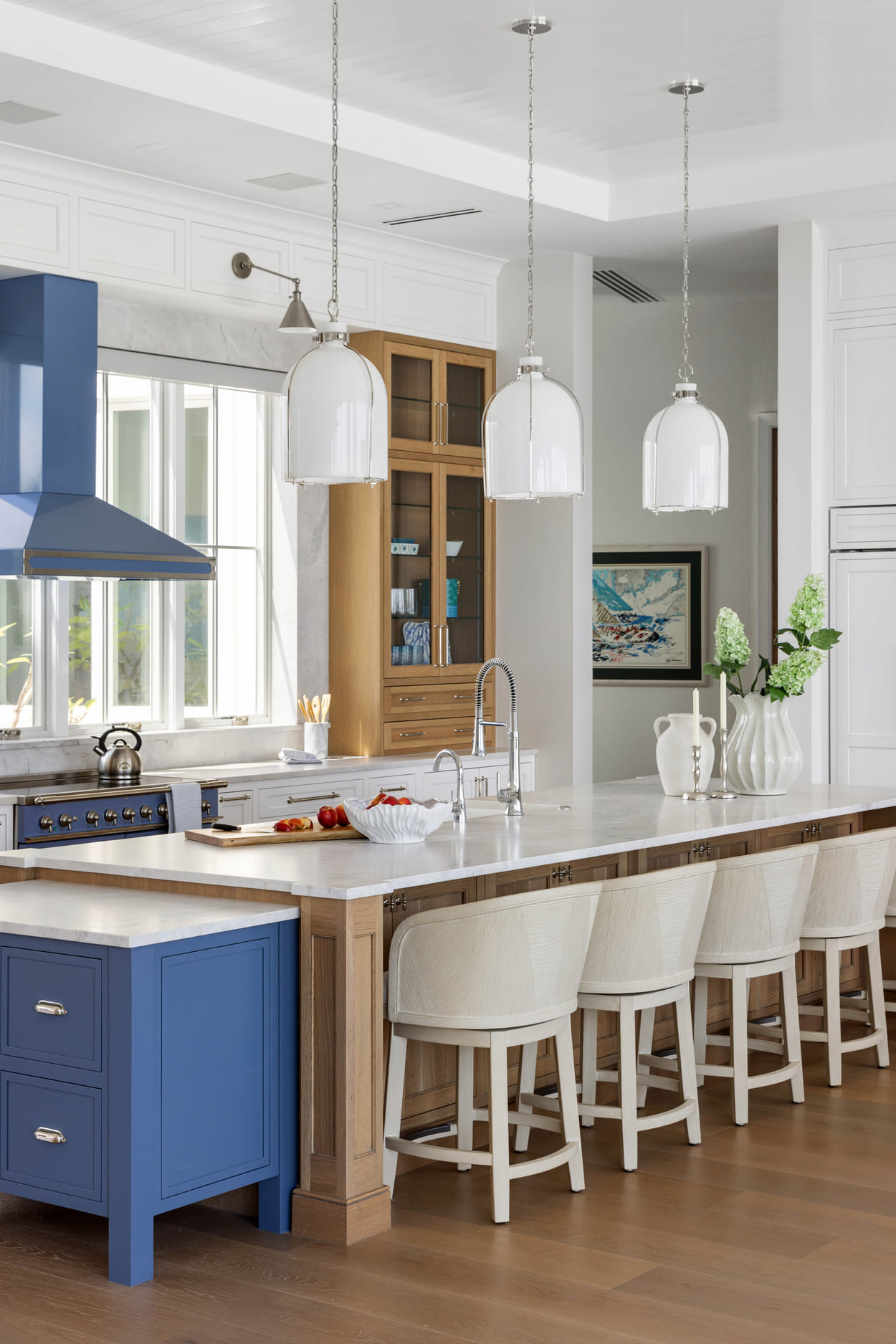
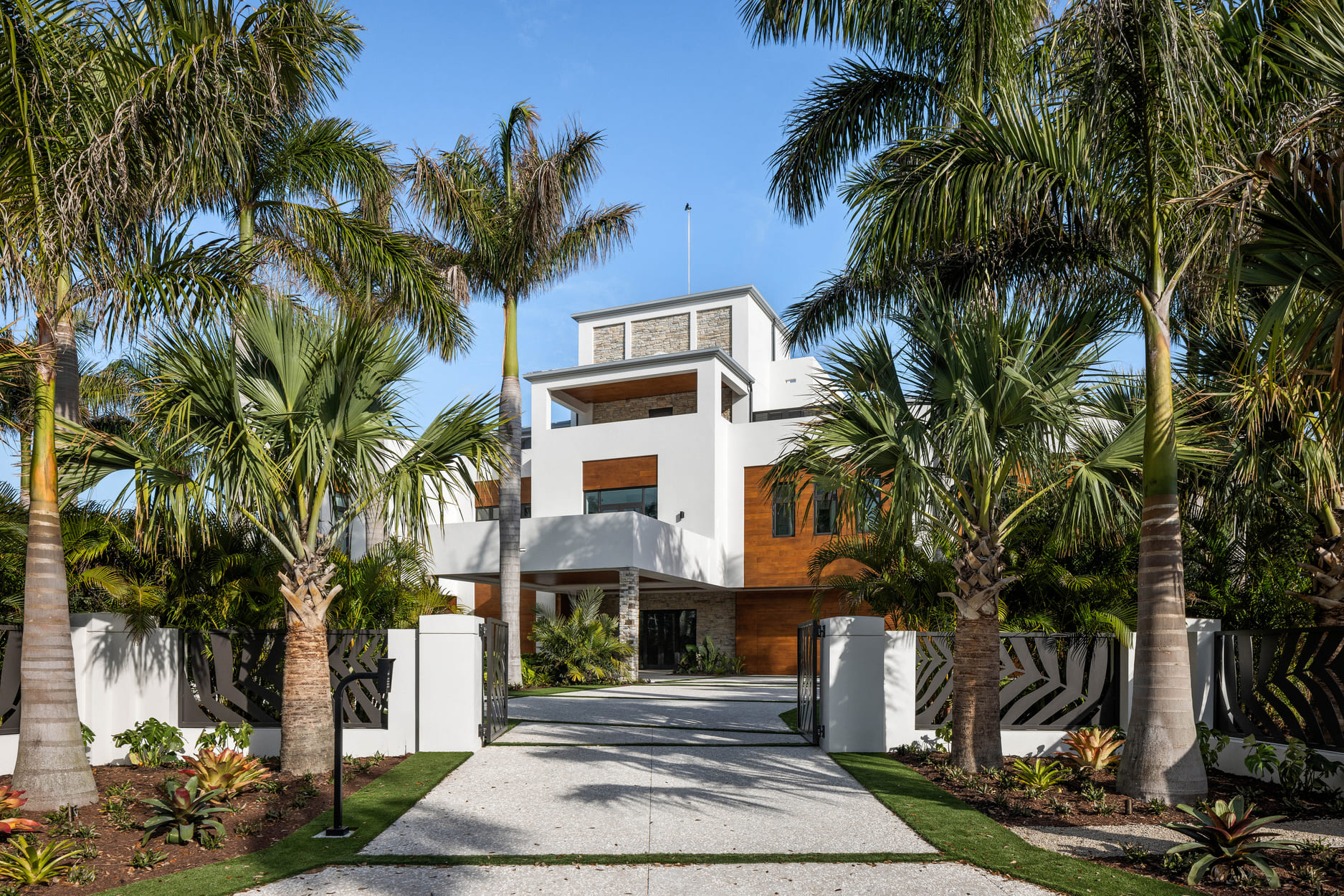
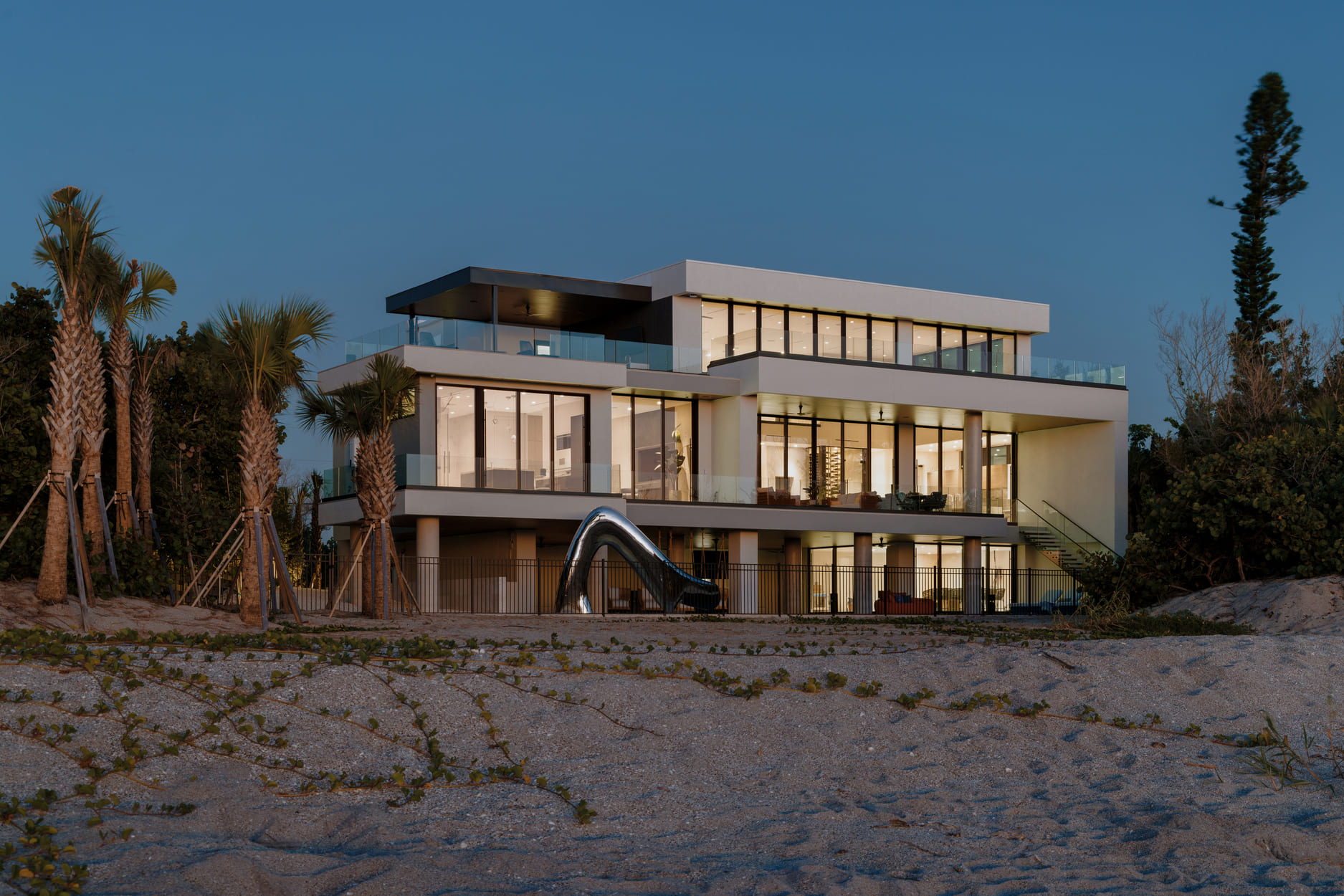
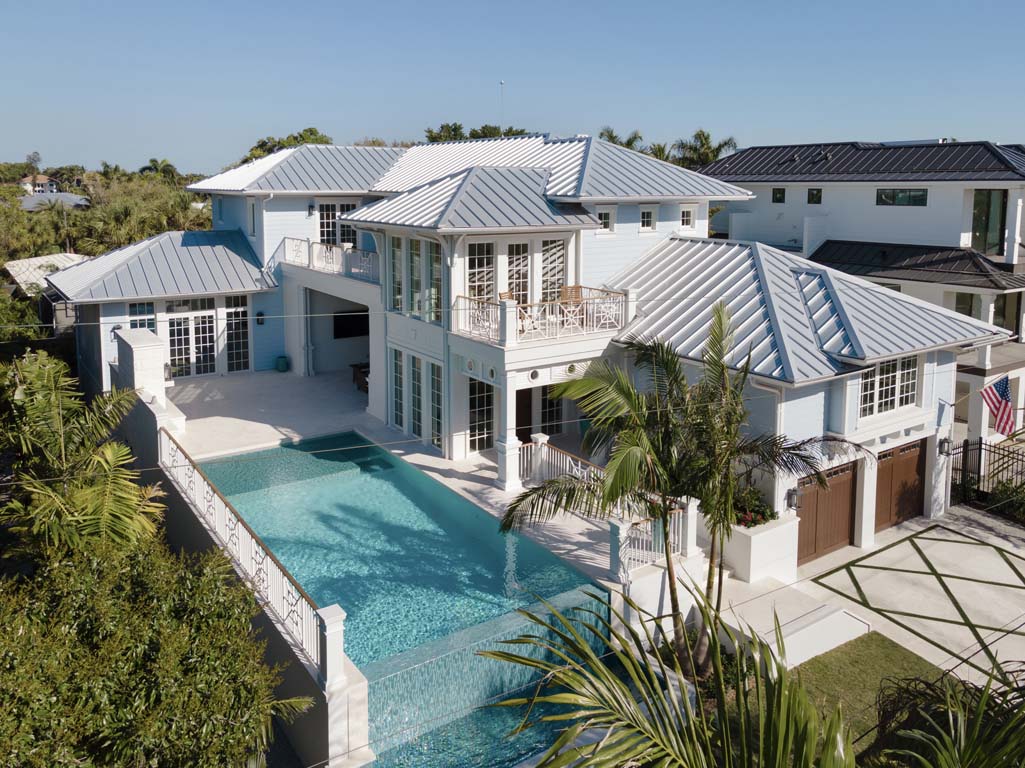
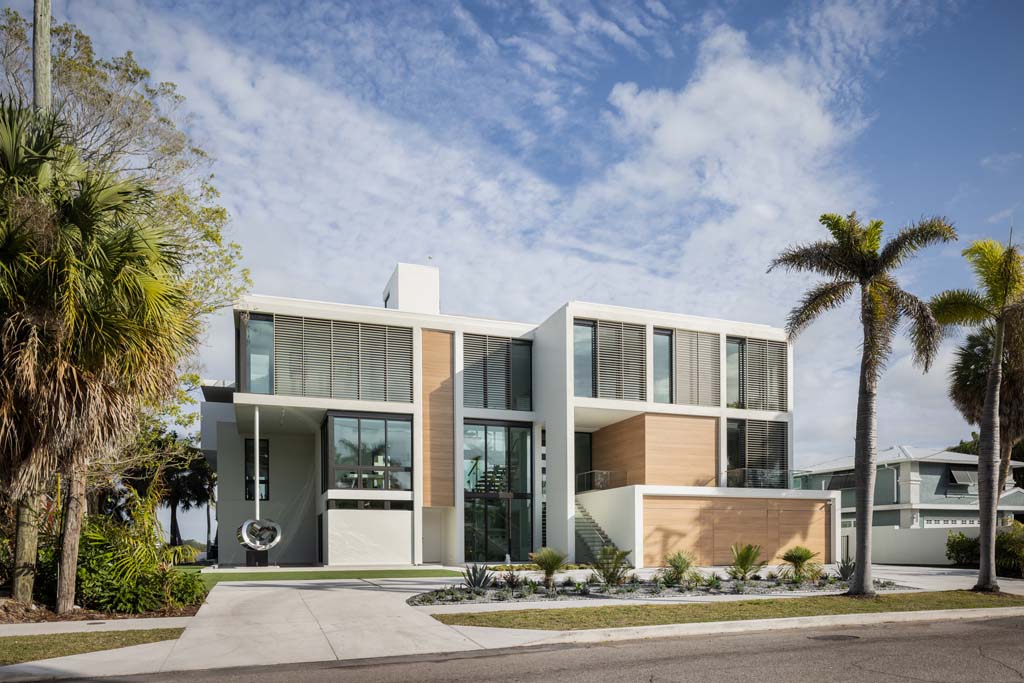
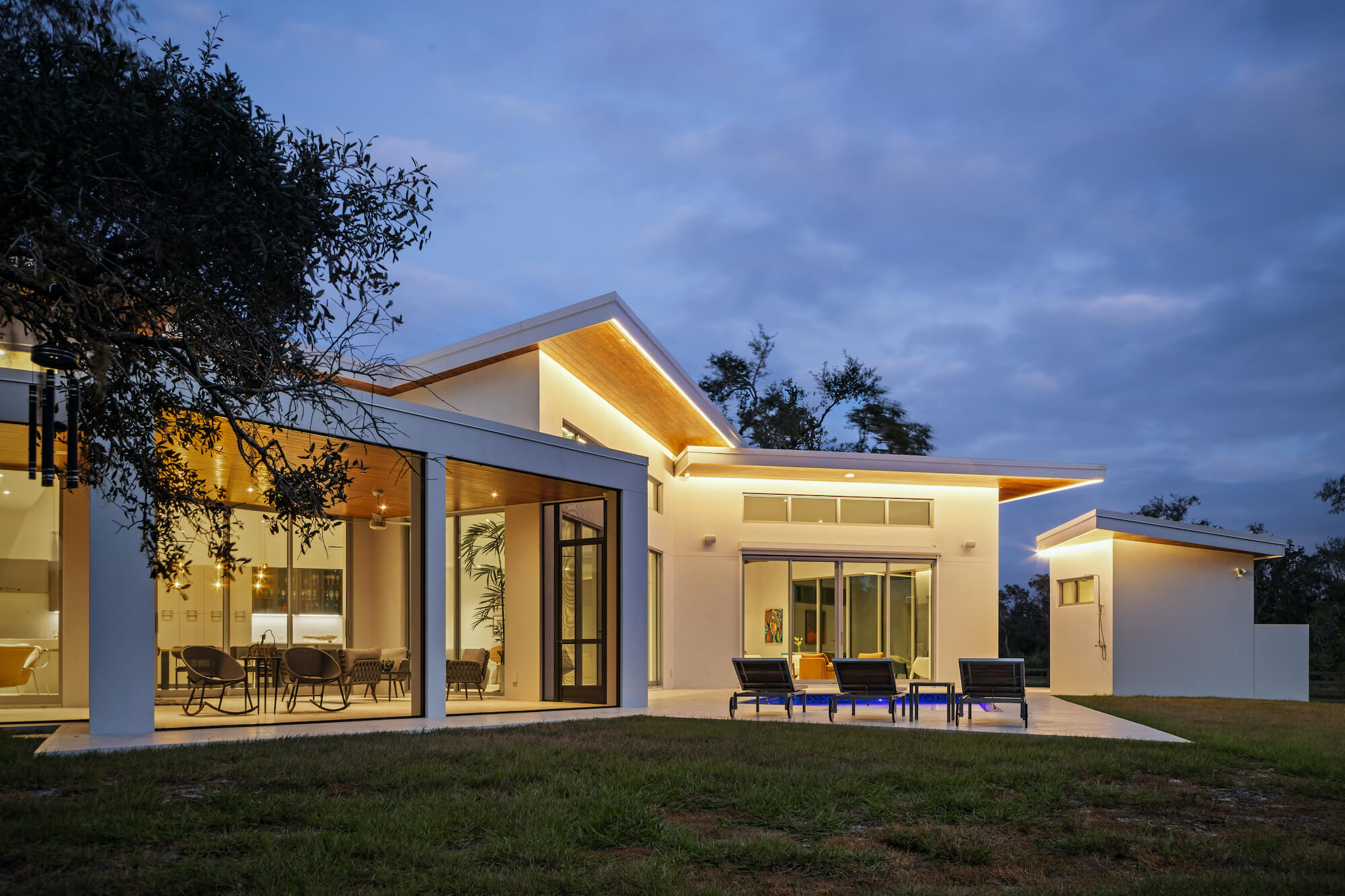
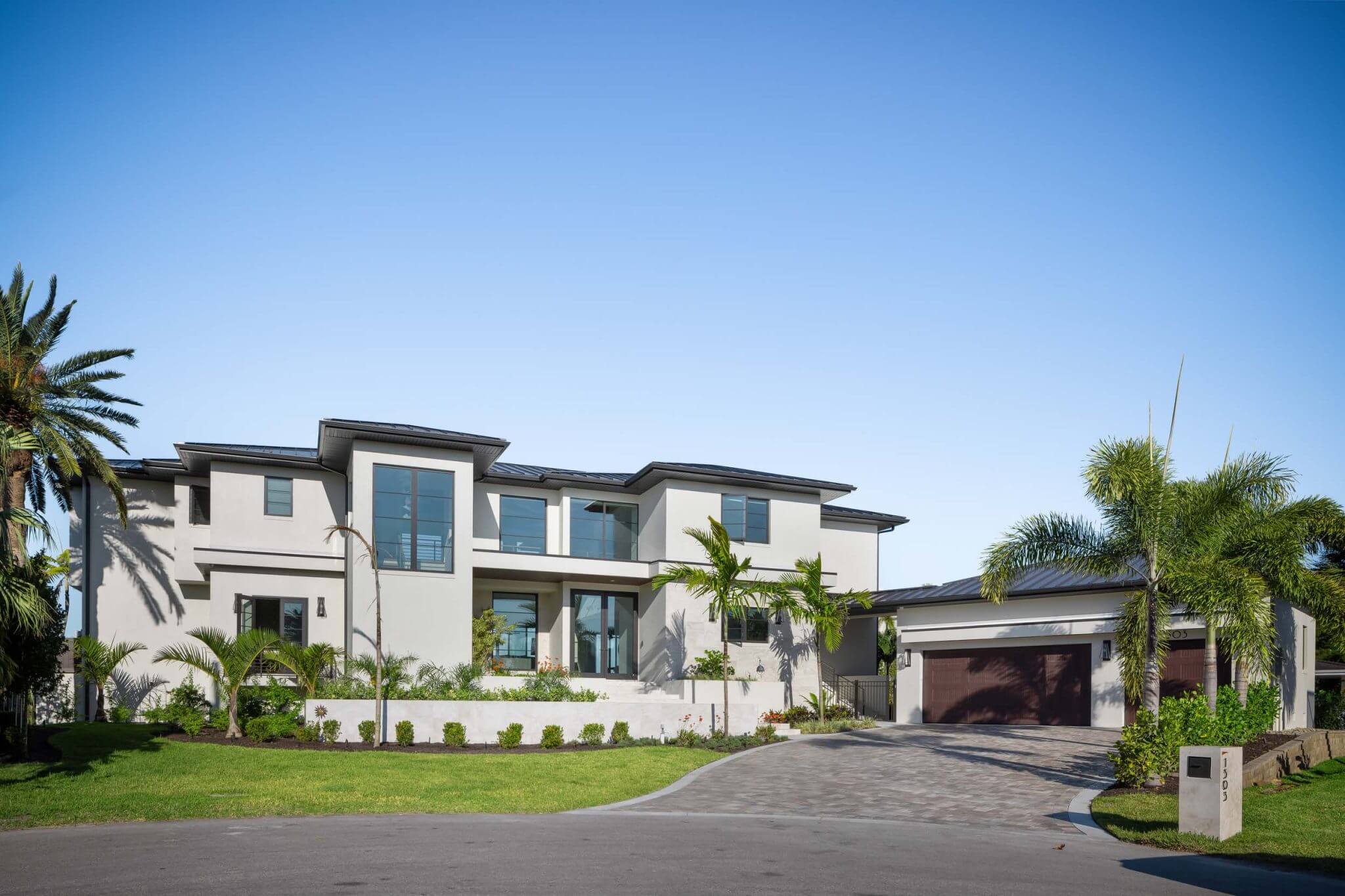
Walk the homes. Ask to see two or three completed homes as close as possible to what you want to build, ideally including one that is a few years old. Look at the details nobody stages: the caulk lines, the door reveals, how the exterior is holding up. Then ask to see one under construction, unannounced if the builder will allow it. A site in mid-build tells you more than a finished one.
Talk to clients. Ask for references and then ask the references the questions the builder will not: what went wrong, how it was handled, whether the budget held, and whether they would build with the firm again. Ask specifically for a client whose project had a problem. Every experienced builder has one, and how they handled it is the whole test.
Check the third parties. Awards do not build your home, but industry recognition is evidence that people who know construction have looked at the work. Trinity Custom Homes has been recognized as Builder of the Year by the AIA Gulf Coast Chapter, with Gold and Silver honors in NAHB’s Best in American Living Awards, with Aurora Awards including Best in Show, and with Best of Houzz from 2022 through 2025. Ask any builder what they have been recognized for and by whom, then check it. The press page is where we keep ours.
The most impartial view of how a builder actually operates does not come from the builder or from the builder’s happiest clients. It comes from the trades. In Sarasota’s luxury market, the pool of craftspeople and vendors who can deliver at this level is small, and they work with every builder you are considering. They see how each one runs a site, pays its bills, plans its schedule, and treats the people doing the work, and they have no reason to flatter anyone.
Ask each builder for the names of the trade partners and vendors who will work on your home, and call a few of them. Then ask about the other builders on your list too. Six questions worth asking:
A builder who is confident in how they work will hand you these names without hesitation. At Trinity Custom Homes, our client and professional references include the trade partners who watch us build, and a few of our competitors. Ask them anything. The honest answer is the one we want you to have.
Two bids for the same drawings can differ by hundreds of thousands of dollars and both be honest. They can also differ by a few thousand and one of them be a fiction. Reading a bid is about finding out which.
Line items, not a lump sum. A lump sum tells you a total. Line items tell you how the total was built and where the risk sits. A builder who will not show them is asking you to trust a number they will not explain.
Allowances, added up. If allowances are a large share of the bid, the bid is mostly placeholders, and the real cost will be decided later, by you, under pressure. Compare allowance amounts across bids for the same items; a large gap in a kitchen allowance is not a difference in price, it is a difference in what each builder assumed you would choose.
Fee and overhead. In a cost-plus contract, ask how the fee is calculated, what overhead is charged to the job, and whether the builder earns anything on savings. A structure that rewards the builder when you save money is aligned. One that rewards them when you spend more should be named as such before you sign.
Exclusions. Every bid excludes something. Read the exclusions before the total. Permits, impact fees, site work, seawall, pool, landscape, and utility connections are the usual places a low number hides its gap.
Schedule and payment terms. Ask for the schedule with the bid, and for the draw schedule with it. A schedule that lives in the builder’s head is not a schedule.
For a longer treatment of why the same home is quoted at very different prices, read the true cost of custom home building.
The last test is the one people skip because it feels soft. It is not. You are choosing someone to have hard conversations with for two or three years. Notice how the first hard conversation goes: when you push on a number, a timeline, or a detail, does the builder explain, deflect, or agree with everything? The one who explains is the one you want.
These are the patterns that, in our experience, predict a difficult build.
A number that arrives before the scope does. A price quoted before the drawings are complete and the site is understood is a sales number, not a construction number.
A bid with few line items and large allowances. The total is not the cost.
No named person on the site. “Our team” is not a superintendent.
Reluctance to show the books, the insurance, or the lien releases. Routine documents that are hard to get are telling you something.
A promise of no change orders. There will be changes. What matters is how they are handled.
Vague answers about the coast. If the builder cannot explain what your lot’s flood zone and control-line status mean for the structure, they will be learning on your home.
A builder who will take any project. Every builder should have work they turn down. At Trinity Custom Homes, we will not take on a project whose budget cannot achieve the client’s vision, and we have walked away from work we wanted rather than sell a number we could not stand behind. A builder with no such stories has either not been in business long or is not telling you.
Your lot, or the lots you are considering, with whatever you know about its flood zone and setbacks. Your architect, if you have one, and the state of the drawings. An honest budget range, including what you have set aside for the unexpected. Your timeline, and what is driving it. And your questions, especially the ones above.
At Trinity Custom Homes, the first conversation is about whether the vision and the budget line up, and if they do not, we say so before anyone signs anything. If that is the conversation you want to have, schedule a planning conversation. If you want to see the work first, the portfolio is the honest place to start.
Check the non-negotiables first: an active Florida contractor license you have looked up yourself, current liability and workers’ compensation insurance, and a lien-release process you can see. Then evaluate coastal and permitting experience on lots like yours, how the builder prepares before construction, who will be on your site every day, how they communicate, how the budget is shown to clients, and what past clients say about a project that had a problem. Builders who answer with names, numbers and documents are the ones to shortlist.
Ask for the license number and search it on the Florida Department of Business and Professional Regulation’s license portal. Confirm it is active, that it is a Certified General Contractor (CGC) or Certified Residential Contractor (CRC) license, and that the licensee is the company you are contracting with. Trinity Custom Homes builds under license CGC1533201.
Whether the lot is seaward of the Coastal Construction Control Line and what that adds to permitting; which FEMA flood zone it is in and what the base flood elevation means for the finished floor; how wind design pressures and impact glazing affect the structure and budget; and for two or three completed homes on comparable lots you can visit.
During design development, before construction documents are complete. A builder pricing the design as it develops protects the architect’s intent and keeps the permitted design inside the budget. Trinity Custom Homes works regularly with DSDG Architects, CMSA Architects, MHK Architects, Jones Architecture, Sweet Sparkman Architecture, PS Design Workshop, Lear Studio Architects, Trop Architecture, and Beacon Home Design, and can introduce you to a firm suited to the home you want to build.
Line items rather than a lump sum, allowances that reflect what you will actually choose, a clear fee and overhead structure, a complete exclusions list, a schedule, and a draw schedule. Compare allowances across bids for the same items; that is usually where the difference lives.
Ask each builder to show you how a client sees the budget during the build and what happens to savings when a line comes in under. Trinity Custom Homes gives clients real-time, line-item access to the project’s financials in Procore, receipts included, and surpluses stay in the client’s budget as visible contingency rather than moving to the builder’s ledger.
The trade partners and vendors. In Sarasota’s luxury market the same small pool of craftspeople works for every builder you are considering, so they are the most impartial source on how each one plans, supervises, communicates, and pays. Ask each builder for the names of the trades who will work on your home, call a few, and ask about the other builders on your list as well.
Long enough that the builder’s process matters more than the start date. Design, permitting and construction each carry their own timeline, and barrier-island sites add state coastal permitting to the county’s. Ask any builder for a schedule with named milestones and how they handle a trade falling behind. Trinity’s process page walks through the eight steps we use.
A custom home is a long partnership. Choose the builder you would want to have a hard conversation with, because at some point you will. The right one will have already had it with you before you signed.
Explore our stunning project portfolio or schedule a consultation to discuss your dream home.